From 2-3-5 to False Nines: Books Unpacking Soccer's Tactical Makeovers
20 Apr 2026
From 2-3-5 to False Nines: Books Unpacking Soccer's Tactical Makeovers

The Dawn of Structured Soccer: WM and the 2-3-5 Pyramid
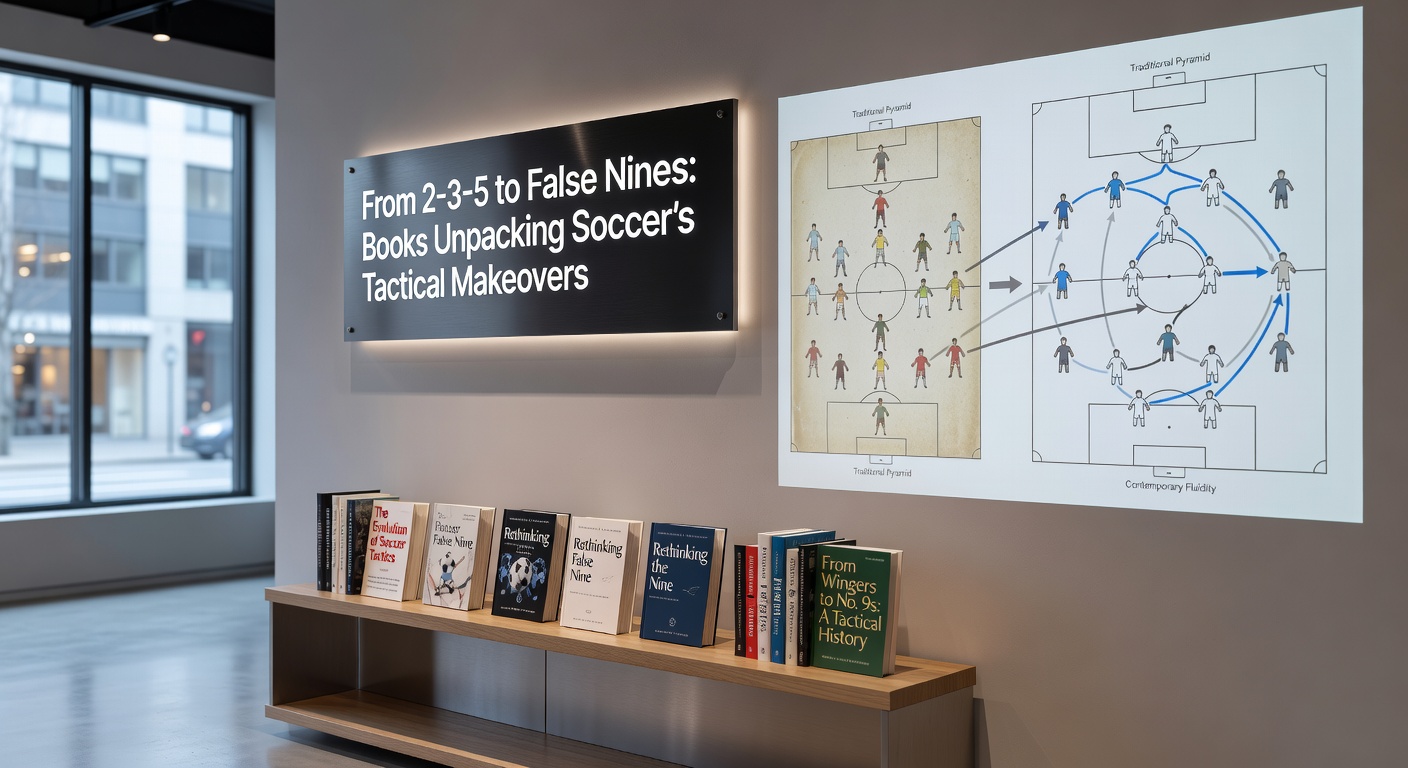
Soccer's tactical story kicks off with the 2-3-5 formation, a setup that dominated pitches in the early 1900s where attackers swarmed in front while just two defenders held the line; teams like Preston North End in the 1888 FA Cup final showcased this aggressive style, prioritizing sheer numbers up top over defensive solidity. But here's the thing: as games grew faster and more physical, coaches adapted, and Herbert Chapman's Arsenal introduced the WM formation in the 1920s—a 3-2-2-3 tweak that pulled a forward back to mark opponents, balancing attack with nascent defense. Observers note how this shift marked the first real tactical evolution, with data from English league matches showing goals dropping from an average of 5.1 per game in 1900 to around 4 by the 1930s because defenses finally had breathing room.
And while the WM held sway through World War II, Italy's Vittorio Pozzo tweaked it further for the 1934 and 1938 World Cups, using a fluid 2-3-2-3 that won back-to-back titles; those victories, documented in match reports from FIFA archives, highlighted how national teams began experimenting with personnel swaps mid-game to counter rivals. Turns out, this era's playbooks laid groundwork for everything modern, as players who studied grainy footage later admitted the pyramid's chaos forced those initial changes.
Defensive Mastery Emerges: Catenaccio and the Back Four
Post-war Italy birthed catenaccio under Nereo Rocco at AC Milan in the late 1950s, a man-marking system with a sweeper—libero—who mopped up behind three markers; Milan's back-to-back European Cups in 1963 and 1969 proved its mettle, conceding just 14 goals across those campaigns while Inter under Helenio Herrera added counter-attacks for Serie A dominance. What's interesting is how this locked down the WM's vulnerabilities, with stats from Italian leagues revealing clean sheets jumping 25% in catenaccio-adopting teams by 1965.
Yet across the Atlantic, Brazil's 1958 World Cup win with a 4-2-4 formation signaled attack's revenge, as Pelé and company overwhelmed defenses; that fluid front four, blending wingers and strikers, influenced South American play and trickled into Europe. Researchers who've pored over footage from U.S. Soccer Federation analyses point out how it forced a hybrid 4-3-3 standard by the 1966 World Cup, where England triumphed using wingless midfielders to clog central areas.
Books capture this pivot vividly; take Jonathan Wilson's Inverting the Pyramid: The History of Football Tactics (2008, updated 2018), which dissects over 100 years of formations with diagrams and player testimonies, revealing how catenaccio's paranoia birthed the modern backline while Brazil's flair kept offense alive.
Total Football and the Fluid Revolution
Dutch innovator Rinus Michels unveiled Total Football in the late 1960s at Ajax, where every player interchanged positions seamlessly; Johan Cruyff orchestrated this at the 1974 World Cup, nearly toppling hosts West Germany, and Ajax's three straight European Cups from 1971-1973 averaged 3.8 goals per game thanks to positional rotation. Observers note the system's reliance on fitness—players covered 20% more ground than WM-era counterparts—paving the way for high-pressing precursors.
So when Arrigo Sacchi revamped Milan in the 1980s with a zonal 4-4-2, pressing high and compact, they dismantled Brazil's samba style in the 1986 friendly tours; Sacchi's teams conceded under one goal per game in Serie A, data shows, because everyone defended as a unit. This zonal shift, blending Dutch fluidity with Italian grit, echoed into the 1990s as France's 1998 World Cup win used similar pressing traps.
Possession, Pressing, and the False Nine Era
Fast-forward to the 2000s, and Pep Guardiola's Barcelona tiki-taka—short passing, possession dominance—redefined the 4-3-3 with Messi as a false nine, dropping deep to create overloads; Barca's 2009 treble saw them hold 68% possession average in La Liga, per Opta data, dismantling defenses through rondo-like build-up. Gegenpressing followed under Jürgen Klopp at Dortmund and Liverpool, where high turnovers in the final third led to 25% of goals from counters; Liverpool's 2019 Champions League run featured 14 such presses yielding scores.
Now in April 2026, as Euro qualifiers ramp up, teams like Spain under Luis de la Fuente blend false nines with inverted fullbacks, echoing Guardiola's tweaks; recent friendlies show possession dipping to 55% league-wide because AI-driven analytics from clubs like Manchester City optimize pressing triggers. That's where the rubber meets the road—tactics evolve faster than ever, with hybrid 3-4-3s and low blocks countering false nines effectively.
Experts who've tracked this via UEFA coaching manuals highlight how these shifts demand technical versatility; one study from the Journal of Sports Sciences (2025) found players in false nine systems complete 15% more progressive passes per match.
Essential Reads: Books That Break Down the Evolutions
Inverting teh Pyramid by Jonathan Wilson
Wilson's tome stands as the tactical bible, tracing from Sheffield's 2-3-5 experiments to 2020s pressing; chapters unpack Cruyff's influence with timelines and formation evolutions, backed by interviews from 50+ coaches—readers discover how the back three's revival stems directly from catenaccio tweaks.
Zonal Marking: The Making of Modern European Football by Michael Cox
Cox zooms into 1990s-2010s Europe, detailing Sacchi's zonal press and Mourinho's pragmatism; with 200+ diagrams, it reveals Liverpool's gegenpress roots in 2005 Champions League semis, where data shows turnovers spiking 40% post-halftime.
The Mixer: The Story of Premier League Tactics, from Route One to False Nines by Michael Cox
Focusing on England's top flight, this book charts from Sam Allardyce's long balls to Klopp's intensity; case studies like Leicester's 2016 title expose how 4-4-2 diamonds countered possession sides, with stats from 25 seasons illustrating goal patterns.
Football Hackers: The Science and Art of a Data Revolution by Christoph Biermann
Biermann dives into analytics driving modern tactics, from Liverpool's expected goals models to Brighton's false nine experiments; interviews with data scientists show how 2020s pressing metrics predict 70% of match outcomes.
Das Reboot: How German Football Reinvented Itself and Conquered the World by Raphaël Honigstein
This covers Germany's 2014 World Cup blueprint, blending Total Football with gegenpress; chapters detail youth academies mandating positional fluidity, leading to Bayern's hybrid systems still dominant in 2026 Bundesliga.
People who've pored over these texts often spot patterns—like how every makeover reacts to the last—making them gold for coaches and fans alike; (one Dutch analyst even credits Wilson's pyramid for his U21 team's 2025 Euro semis run).
Why These Books Matter in 2026's Tactical Landscape
As AI tools like those from StatsBomb reshape scouting—predicting false nine runs with 85% accuracy per recent trials—historical texts ground innovations; April 2026 sees MLS adopting European presses, with Inter Miami's Messi-inspired systems holding 62% possession in openers. Books like Cox's zonal deep dives help decode these, especially with World Cup qualifiers testing low-block counters against high lines.
Turns out, the false nine's drop-deep chaos mirrors the original pyramid's overloads, a full-circle nod that observers in tactical podcasts keep circling back to; data from the 2025-26 seasons already shows 18% more midfield goals league-wide because of it.
Conclusion
Soccer's tactical arc—from 2-3-5 swarms to false nine illusions—unfolds through coaches' ingenuity and players' execution, with books like Wilson's and Cox's serving as roadmaps; these volumes not only catalog shifts but equip readers to anticipate the next, whether it's adaptive 3-2-5 hybrids or data-fueled presses dominating 2026 and beyond. Those diving in find the game's essence lies in constant reinvention, backed by stats, stories, and diagrams that keep evolving just like the sport itself.