20 Aug 2026
Soccer's Trading Card Archives and Their Quiet Role in Mapping Player Career Paths Across Lesser-Known Leagues in South America and Eastern Europe
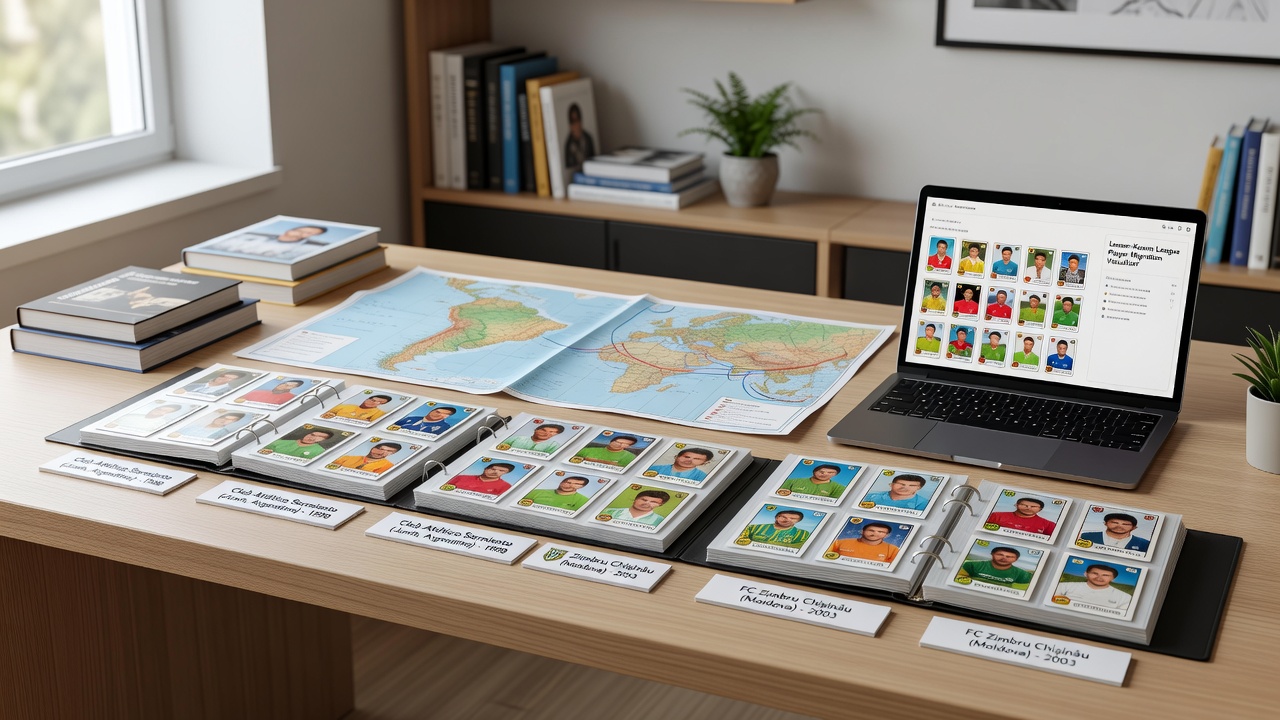
Trading card collections compiled by manufacturers such as Panini and Topps have accumulated detailed records of players who competed in regional leagues across South America and Eastern Europe, and these materials now serve as reference points for tracing movements between clubs. Collectors and researchers access these archives to identify patterns in how athletes progressed from smaller divisions to higher-profile competitions, since the cards often list team affiliations, birthplaces, and seasonal statistics that official federation databases sometimes overlook.
Building the Card Collections Over Decades
Companies began issuing sets focused on South American markets in the 1970s, with Brazilian and Argentine editions including squads from state championships and second-tier divisions, while Eastern European releases in the 1980s covered Polish and Romanian domestic competitions that rarely received international coverage. Each card carried printed data on the player's current club and sometimes previous teams, creating chronological snapshots that later allowed cross-referencing of career trajectories. Observers note that these physical items survived in private collections even when club records from that era were lost during economic shifts or political changes.
Tracing Routes Through Lesser-Known Leagues
Researchers examining card sets from the 1990s have identified sequences where players appeared first on cards from Paraguayan or Uruguayan provincial sides before showing up in subsequent editions tied to clubs in Serbia or Bulgaria. Data compiled from these sources reveals consistent pathways, such as talents moving from lower Argentine leagues to mid-table Romanian teams within two seasons, and the cards provide the only consistent visual and statistical record of those transitions. In August 2026, a digital indexing project launched by a consortium of European sports historians began scanning thousands of Eastern European cards to link them with South American sets, making these connections searchable by name and year.
Connecting Scouting Records With Physical Archives
Club archivists in Brazil and Poland have cross-checked trading card entries against handwritten scouting notes preserved from the same periods, and the combined materials show how agents used the cards as quick references when evaluating prospects from remote leagues. One documented case involves a midfielder listed on a 1994 Bolivian second-division card who later appeared on a Hungarian league set in 1997, illustrating a route that federation transfer logs at the time did not fully capture. The physical format of the cards, with their fixed printing dates, supplies temporal anchors that help verify timelines when digital records remain incomplete.
Supporting Academic and Institutional Research
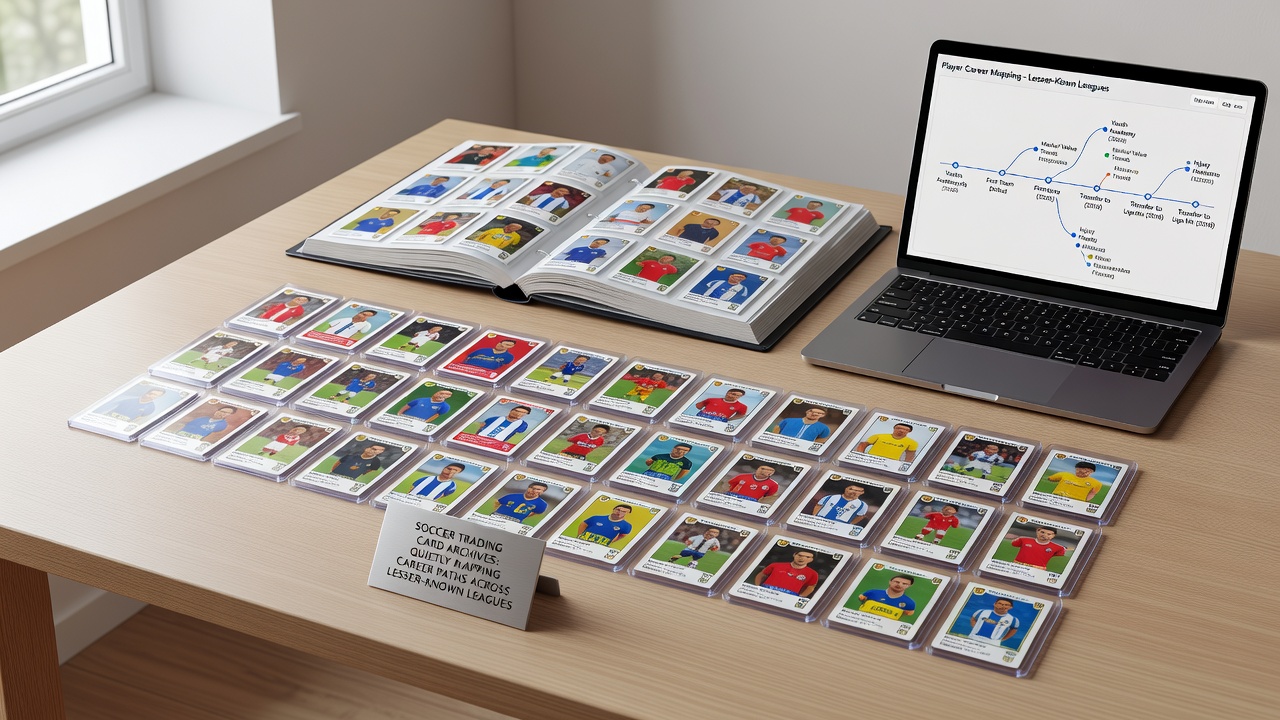
Studies conducted by sports science departments at universities in Chile and the Czech Republic have incorporated trading card data to analyze migration patterns between peripheral leagues, and findings indicate that many players followed routes documented first on these collectibles rather than in mainstream press coverage. According to reports from the South American Football Confederation, transfer volumes between second-division clubs in Colombia and equivalent levels in Slovakia increased steadily through the early 2000s, with card archives providing granular confirmation of individual journeys that aggregate statistics alone cannot supply. Researchers at the University of São Paulo have similarly drawn on Argentine card sets to map youth-to-senior progressions within regional competitions that seldom generate public transfer announcements.
Current Applications in Talent Identification
Modern scouting platforms now reference digitized portions of these archives when building profiles of players still active in lower South American or Eastern European divisions, and the historical patterns help predict likely next steps in a career. Trading card entries from the 2010s onward include QR codes or online links in newer releases, yet the older printed versions remain essential for filling gaps in leagues that lacked systematic digital logging until recently. Analysts continue to update databases by matching current player registrations against the visual and textual details preserved on decades-old cards.
Conclusion
Trading card archives have functioned as an auxiliary documentation system for player movements through South American and Eastern European leagues where official records were sometimes sparse. The combination of printed statistics, club affiliations, and chronological release dates supplies a durable reference layer that complements federation databases and scouting notebooks. As digitization efforts expand in 2026 and beyond, these collections continue to support research into career pathways that connect regional competitions across two continents.