23 Jul 2026
Standardizing the Whistle: Vintage Rulebooks and Federation Circulars in Southern Hemisphere Football
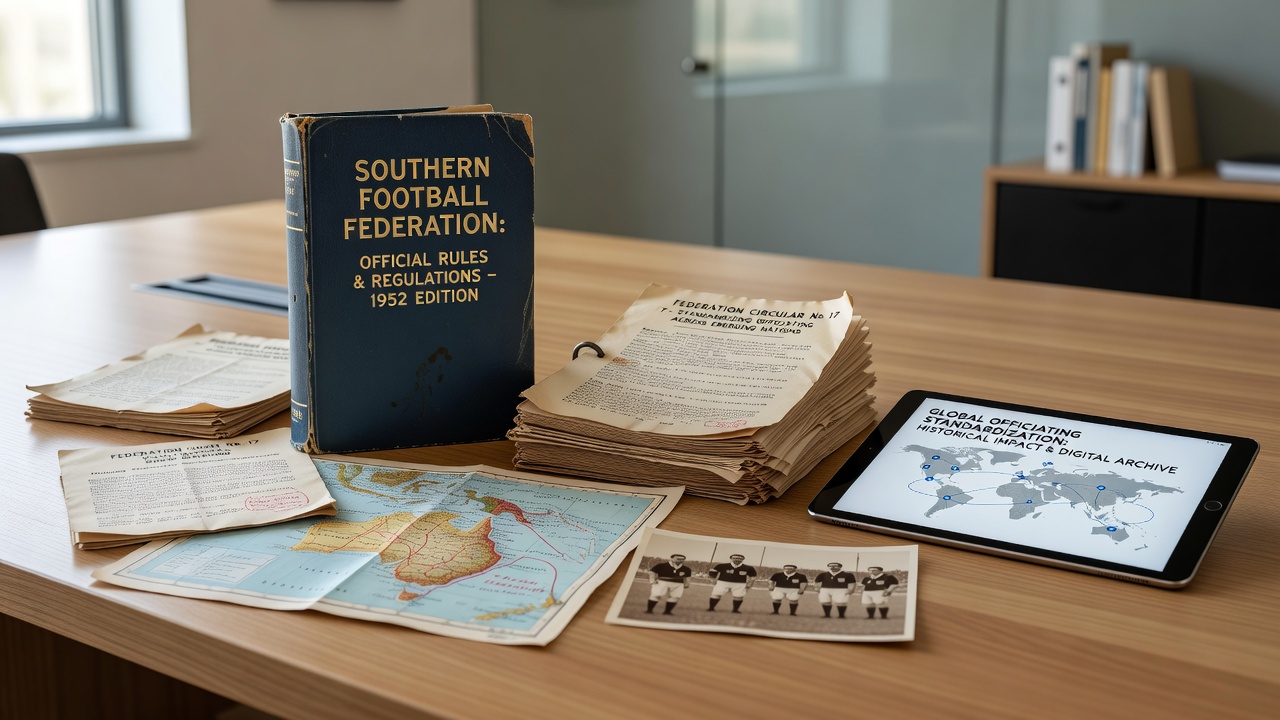
Football federations in emerging southern hemisphere nations relied on printed rulebooks and circulars to align officiating practices during the sport's expansion in the early and mid twentieth century, and researchers have traced how these documents created consistent decision making frameworks from Australia to South Africa and Argentina. Early rulebooks from the English Football Association reached these regions through colonial networks and club secretaries, yet local federations adapted the texts through circulars that addressed regional conditions such as pitch surfaces and climate.
Early Circulation of Printed Rules
Australian state associations received bound rulebooks by 1905 and issued circulars that clarified handball interpretations for referees working matches on hard, dry grounds, while New Zealand federations followed similar patterns after 1910 and distributed updates that standardized offside rulings across provincial leagues. South African officials obtained translated excerpts from British publications and added local circulars that covered altitude effects on ball flight, and these materials reached clubs in Johannesburg and Cape Town by the 1920s.
Argentine and Uruguayan federations produced their own Spanish language editions of core rules during the same period and circulated amendments that addressed crowd management at large stadiums in Buenos Aires and Montevideo. Observers note that these printed materials reduced variations in penalty awards and foul calls between urban and rural matches, and data from surviving match reports show fewer disputed decisions after circular distribution.
Training and Application Across Regions
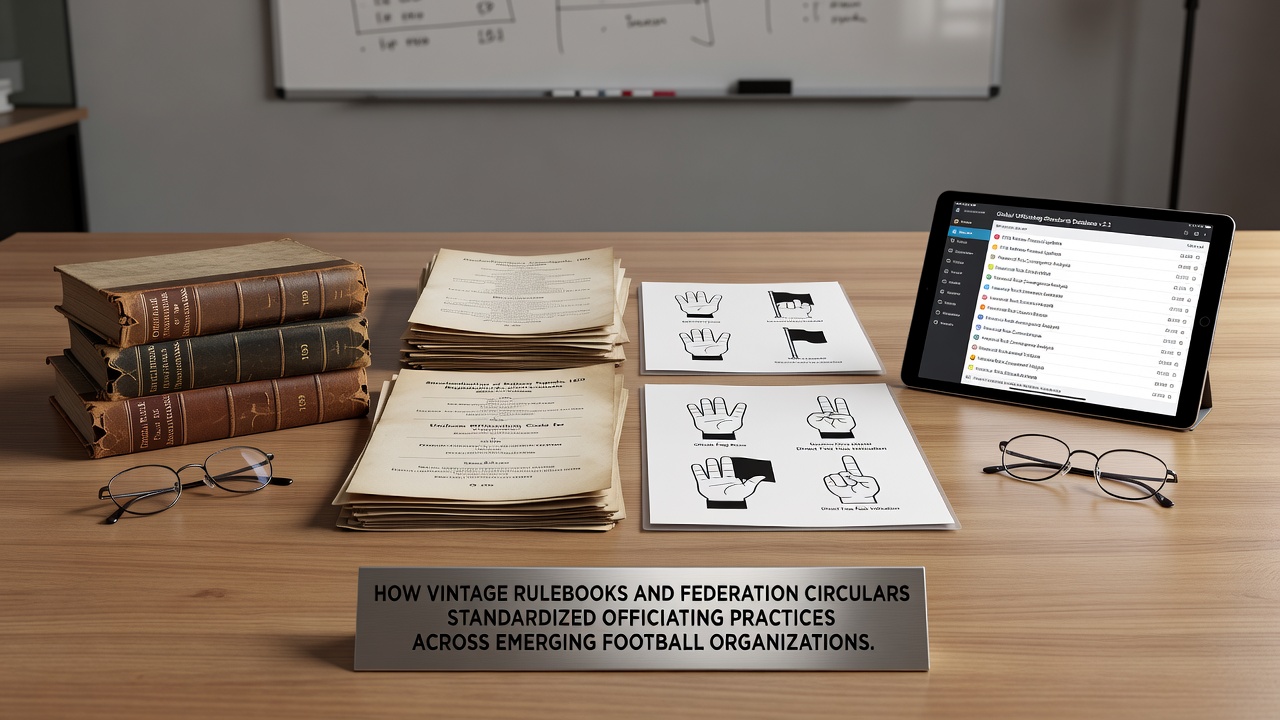
Referee training programs in southern hemisphere nations incorporated excerpts from these rulebooks and circulars into examination materials, and Australian courses in the 1930s tested candidates on specific circular clauses that governed advantage play. South African associations organized annual refresher sessions that used updated circulars to align interpretations before domestic cup competitions, and similar sessions appeared in New Zealand by the late 1940s.
Those who studied federation archives have documented how circulars addressed emerging issues such as substitute protocols and injury stoppages, and these additions spread through mail networks between federations. One study of preserved documents from the 1950s revealed that South American leagues adopted uniform timekeeping standards after receiving circulars modeled on Australian examples, which reduced discrepancies in added time across matches.
Consistency in International and Domestic Matches
Emerging nations used these standardized documents to prepare officials for cross border fixtures, and Australian and South African referees applied identical interpretations of dangerous play after reviewing shared circulars ahead of tours in the 1960s. Argentine federations exchanged rule clarifications with Uruguayan counterparts through formal letters that referenced the same printed editions, and this exchange produced consistent handling of dissent cases during Copa America qualifiers.
Records from the period indicate that match reports from domestic leagues showed increased uniformity in card issuance and free kick placements once circulars reached provincial referees, and New Zealand associations reported similar outcomes after incorporating Australian circular language into local guidelines. Researchers at the University of Melbourne have examined these patterns through digitized federation correspondence and found measurable reductions in appeals related to officiating errors after 1955.
Archival Records and Later Developments
Surviving collections held by national archives in Canberra, Pretoria, and Buenos Aires contain complete runs of circulars that illustrate incremental updates to rules on substitutions and equipment checks, and these records continue to inform current training modules. In July 2026 the Australian Football Federation plans to release an online database of these circulars, which will allow researchers in New Zealand and South Africa to compare parallel developments across the southern hemisphere.
Academic papers from institutions in Cape Town have analyzed how early circulars influenced modern referee education programs, and the same studies note that core clauses on foul severity remain embedded in contemporary manuals. Federation reports from the 1970s onward reference these vintage texts when introducing technology assisted decision systems, and the continuity demonstrates the lasting role of printed standardization.
Conclusion
Vintage rulebooks and federation circulars established shared frameworks that aligned officiating across southern hemisphere nations during football's formative decades, and archival evidence confirms their continued influence on training and match protocols. The planned 2026 digitization projects will further illuminate these connections and support comparative research between regions that once operated in relative isolation.