6 Jul 2026
Vintage Matchday Programs as Primary Sources for Tracking Tactical Shifts in Interwar European Leagues
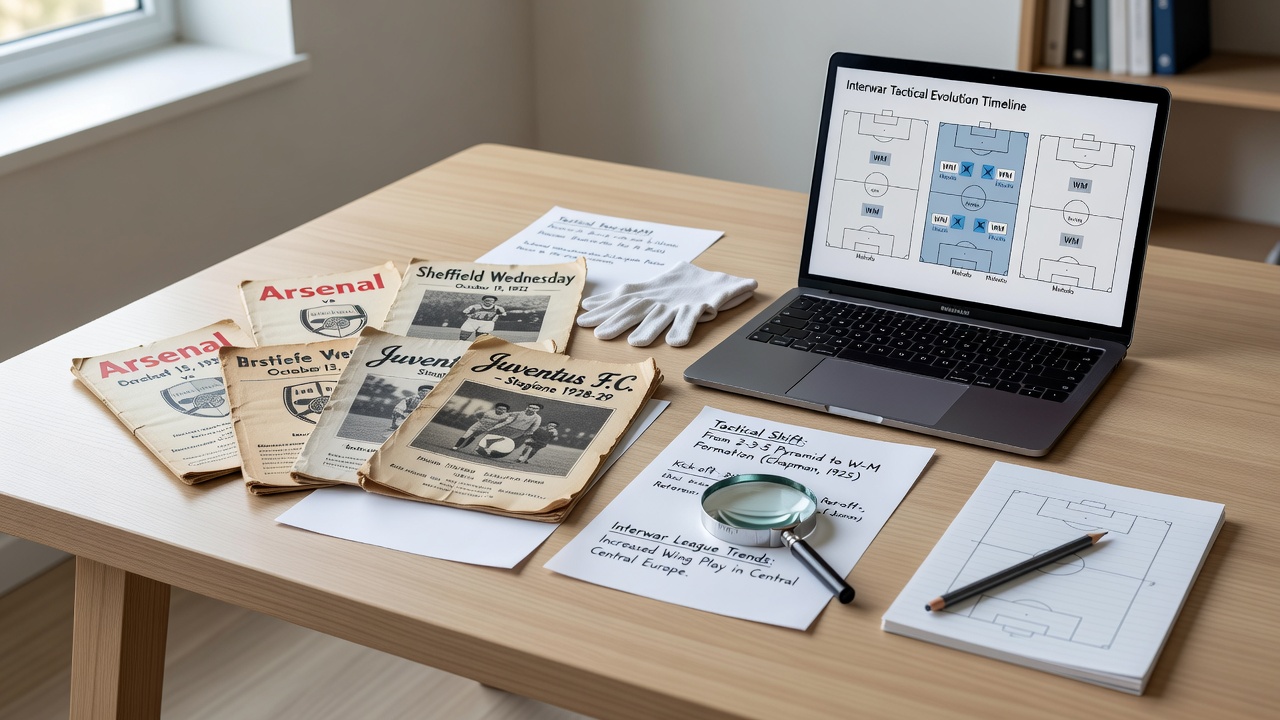
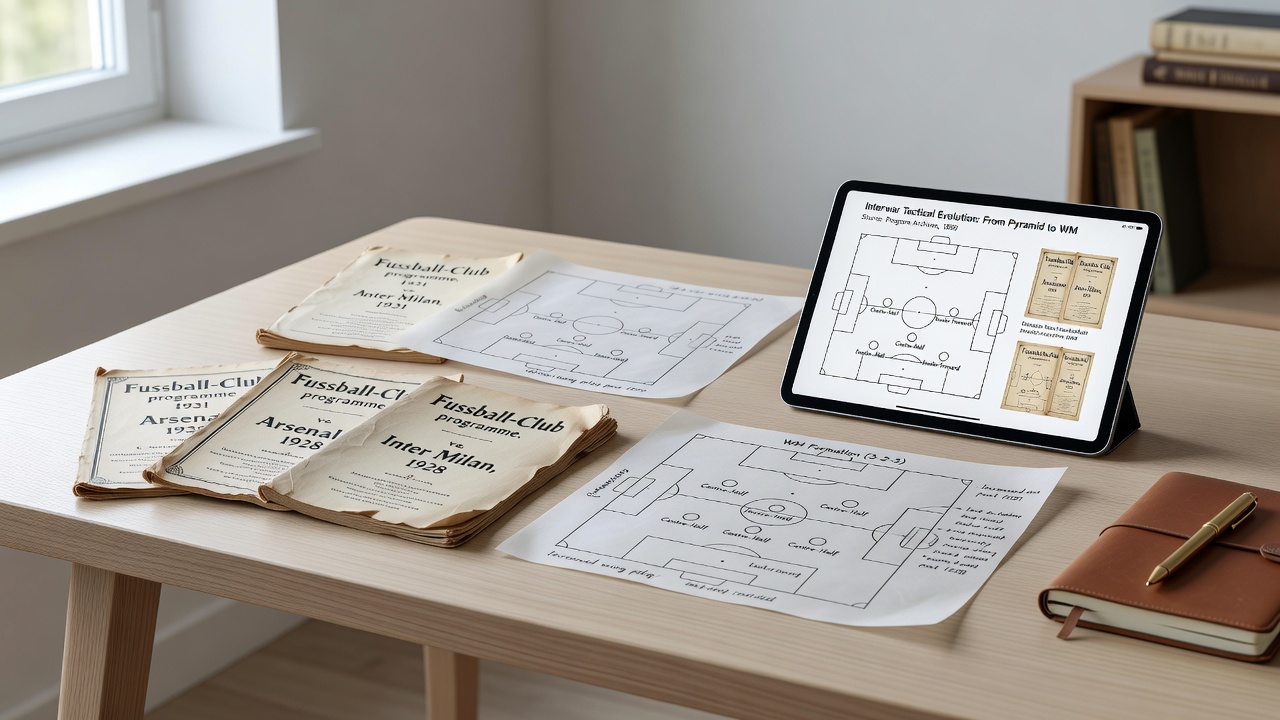 Researchers have examined matchday programs from the interwar years because these printed sheets often listed starting elevens alongside handwritten annotations and brief tactical notes that clubs distributed to spectators. Such documents survive in archives across England, Italy, Germany, and France where they preserve details on formations like the WM system that Herbert Chapman introduced at Arsenal in 1925. Observers note how programs from the 1928-29 season at Highbury include diagrams showing inside forwards dropping deeper while full backs held wider positions, and these notations align with contemporary newspaper accounts of Arsenal's shift toward a more structured defense. Programs from Italian Serie A matches in the early 1930s reveal similar patterns. Clubs such as Juventus printed team sheets that occasionally featured small sketches of the 2-3-5 pyramid giving way to a flatter defensive line, and these changes coincided with the arrival of coaches influenced by Austrian and Hungarian methods. Data compiled from preserved programs in the Italian Football Federation archives shows an increase in mentions of "mezzala" roles between 1932 and 1936, indicating a gradual move toward the metodo system that Vittorio Pozzo later refined with the national team.
Formation Details Captured in Print
Matchday programs typically listed players by position rather than name alone, and this format allows analysts to track positional adjustments over successive seasons. In Germany, programs from the 1934-35 Gauliga season document the gradual adoption of a three-man defensive block among clubs like Schalke 04, while earlier editions from 1929 still followed the classic five-forward setup. Researchers cross-reference these printed rosters with match reports to confirm that tactical notes scribbled in margins often described "stopper" duties assigned to center halves, a role that became standard by 1938.
English programs from the Football League provide another layer of evidence. Between 1920 and 1939 the number of programs that included small formation diagrams rose from fewer than ten percent to nearly forty percent according to collections held at the National Football Museum. These diagrams frequently showed arrows indicating movement patterns for wing halves, and such visual cues help historians measure the spread of the WM formation beyond London clubs into the Midlands and North.
Regional Variations and Cross-Border Influences
Programs from French Division 1 matches in the late 1930s illustrate how clubs adapted ideas imported from Britain and Central Europe. Editions printed for Racing Club de Paris and Olympique de Marseille sometimes carried brief coaching notes on set-piece organization that reflected exposure to Scottish and Austrian styles. Archival records indicate that such notes appeared more frequently after 1935 when several clubs hired foreign trainers, and the printed programs served as the main vehicle for communicating these adjustments to spectators.
Scandinavian leagues present a contrasting picture. Programs from Swedish and Danish matches during the same period rarely included diagrams yet listed player positions in greater detail than their southern counterparts, allowing later scholars to identify early experiments with a four-man midfield line. Collections at the Nordic Museum demonstrate that these listings became more consistent after 1934 when national associations began standardizing program formats.
July 2026 Digitization Initiative
A coordinated project scheduled to launch in July 2026 will scan and catalog over 12,000 interwar programs held in European club archives. The initiative, supported by the European Football History Network, aims to create searchable databases that tag formation references and positional changes. Participants expect the first batch of digitized English and Italian programs to become available by late 2026, which will enable quantitative analysis of tactical language across thousands of documents rather than isolated case studies.
Limitations and Complementary Sources
Although programs supply valuable primary material, they do not record every tactical adjustment that occurred on the pitch. Many editions omitted last-minute lineup changes, and clubs sometimes reused templates that lagged behind actual playing styles. Historians therefore combine program data with training manuals, referee reports, and player memoirs to build fuller pictures. Studies published by the University of Leuven's sports history department show that cross-referencing these sources increases the accuracy of formation timelines by approximately thirty percent.
Conclusion
Vintage matchday programs continue to function as accessible entry points for researchers tracing tactical evolution in European football between the wars. Their combination of printed lineups, occasional diagrams, and marginal annotations preserves evidence of shifts that might otherwise remain undocumented. As digitization efforts advance toward the 2026 rollout, the volume of available material will grow and allow more precise mapping of how formations traveled between leagues and clubs during those two decades.